The short answer
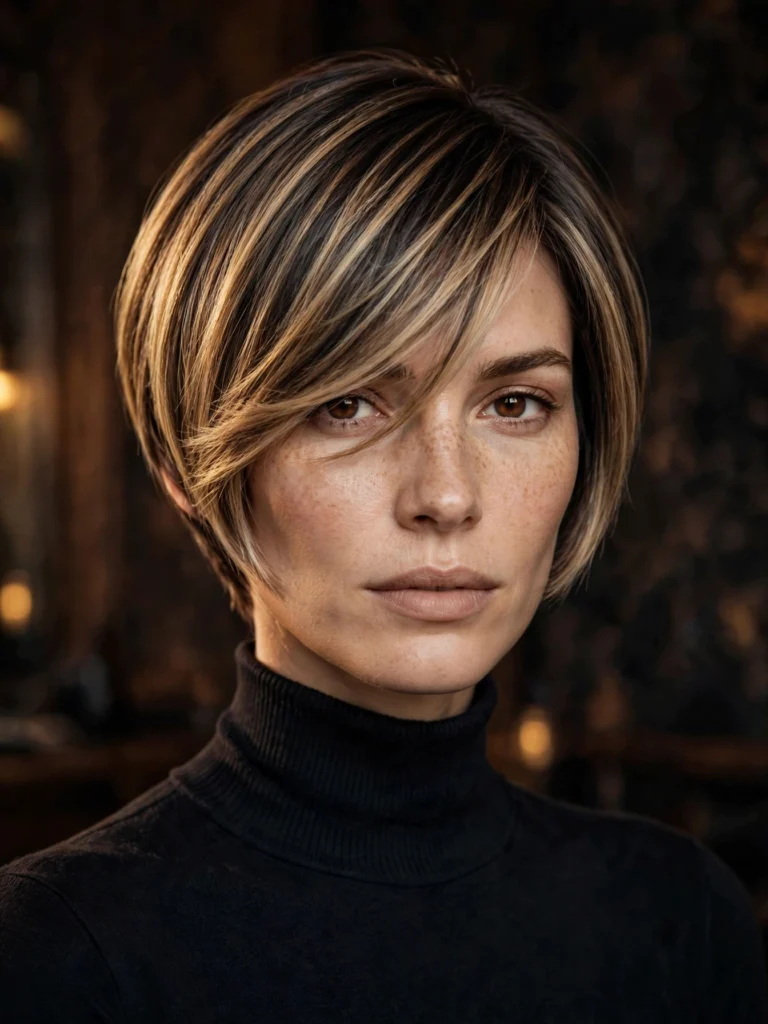
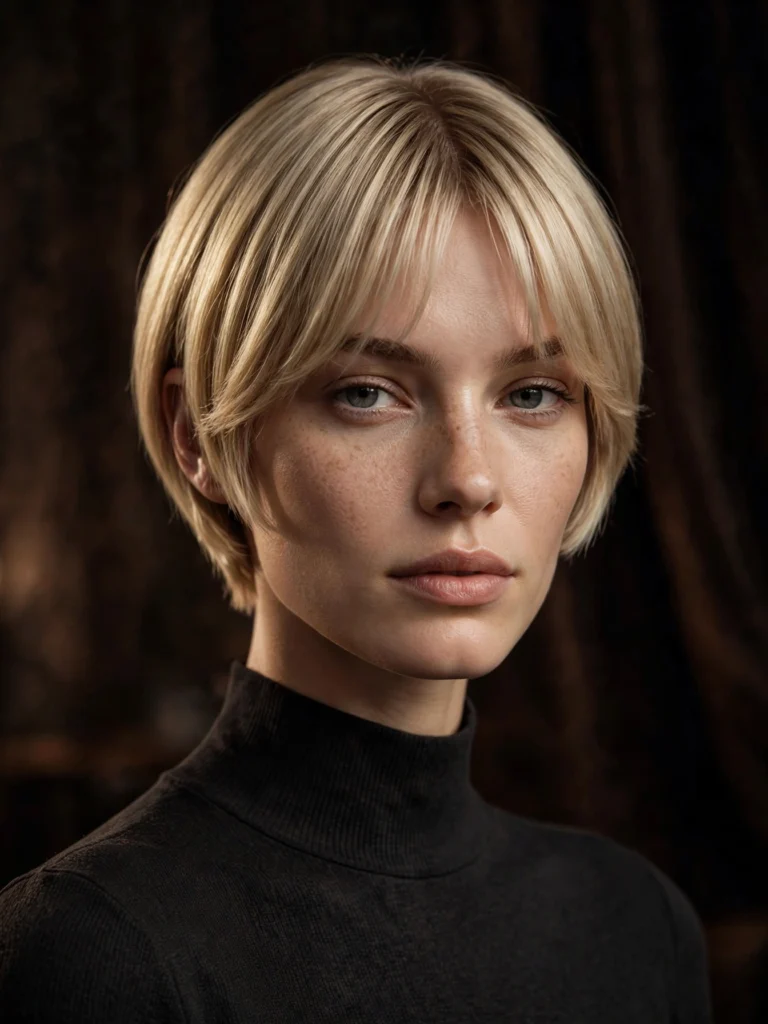
A bixie haircut blends elements of a bob and a pixie. It usually combines shorter, layered shaping with longer pieces around the fringe, temples, ears or nape. The balance can lean toward a compact pixie or a fuller short bob.
There is no single required length or finish. A bixie can look smooth, softly feathered, wavy or curly. Its identity comes from how the shorter and longer sections connect, rather than from one measurement or a deliberately messy appearance.

What makes it a bixie
Look at the relationship between the crown, fringe, sides and neckline. Shorter layers may create movement through the top, while longer sections retain some of the coverage associated with a bob.
The outline does not need to follow one fixed pattern. Some versions expose the ears and keep the nape close; others leave longer side pieces or a fuller lower edge. A long fringe can also change the impression without making the whole haircut longer.
When comparing references, notice:
- Crown: Is the top closely shaped, softly rounded or visibly lifted?
- Fringe and sides: How much forehead and ear coverage remains?
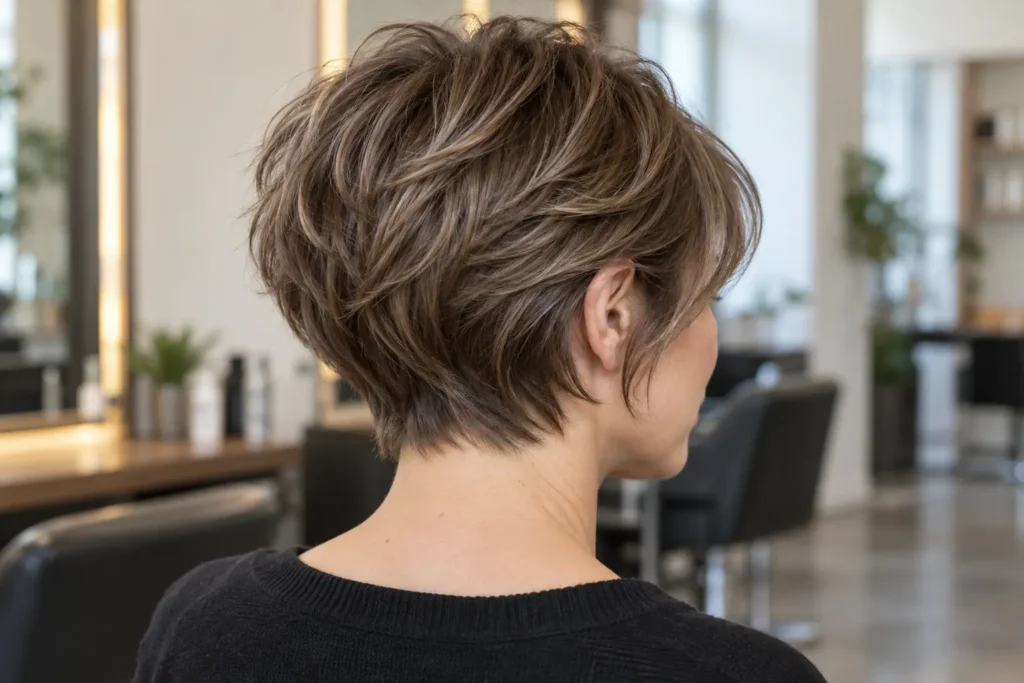
- Neckline: Does the back taper inward or retain a fuller boundary?
These details communicate more than simply asking for a “short bixie.” Choose the proportions you like, then discuss how they could work with your own hair.
How is a bixie different from a pixie or bob?
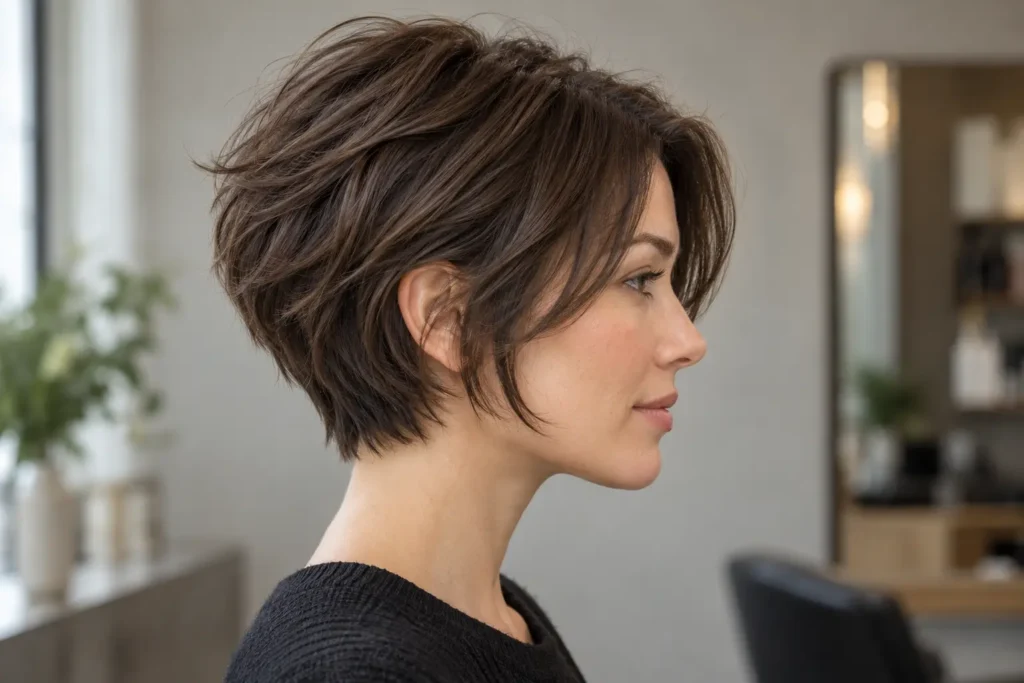
A pixie commonly has closely shaped sides and back, although its top or fringe can remain longer. A bob usually retains a more continuous lower outline, and it can include layers. A bixie combines features associated with both.
The categories can overlap. A long fringe does not automatically make a pixie a bixie, and adding layers does not automatically turn a bob into one.
Compare the whole shape rather than relying on the haircut name alone. The bixie vs pixie vs bob guide shows the differences through front and rear-profile references.
Who it suits
A bixie can be adapted for different textures and preferences, but the reference should match the features you want to keep. Someone who likes an open forehead and exposed ears may choose different proportions from someone who wants a long fringe and enough side length to tuck back.
Discuss your natural texture, strand thickness, density and growth direction before deciding how much layering to add. Fine strands and low density are different characteristics, so explain both rather than using “fine” and “thin” interchangeably.
Your routine matters too. Consider:
- Whether you usually air-dry or use styling tools.
- How much time you want to spend arranging the fringe.
- Whether you wear glasses or regularly tuck the sides.
- How comfortable you are with a shorter neckline.
Browse the bixie collections to shortlist specific shapes. A photograph can communicate a preference, but it cannot predict exactly how your hair will settle.

What to ask your stylist
Bring a small selection of references and explain what attracts you to each one. You might prefer the fringe in one picture and the ear coverage in another. Ask whether those details can connect into a workable shape for your hair.
A useful starting request is:
“I’d like a bob–pixie blend with these proportions. I want to keep this much length around the face and ears, and I prefer this outline at the back. Can we adapt the layers to my natural texture and normal styling routine?”
Before the haircut begins, agree on:
- Where the shortest fringe pieces should sit when dry.
- How much of the ears you want covered.
- Whether the back should be close, softly tapered or fuller.
- Which sections need enough length for tucking or sweeping.
- What styling and reshaping the chosen outline is likely to involve.
Use the name “bixie” to start the conversation, then use the photographs and these details to make the request more precise.
Styling and upkeep
The styling routine depends on the version you choose. A smooth side sweep, a separated fringe and a curly outline may need different approaches. Ask your stylist to demonstrate the steps that matter for your cut and explain which details will need regular attention.
If you plan to grow the cut longer, discuss which sections should retain length during reshaping. Follow the bixie styling guide for practical routines, texture-specific adjustments and common styling problems.