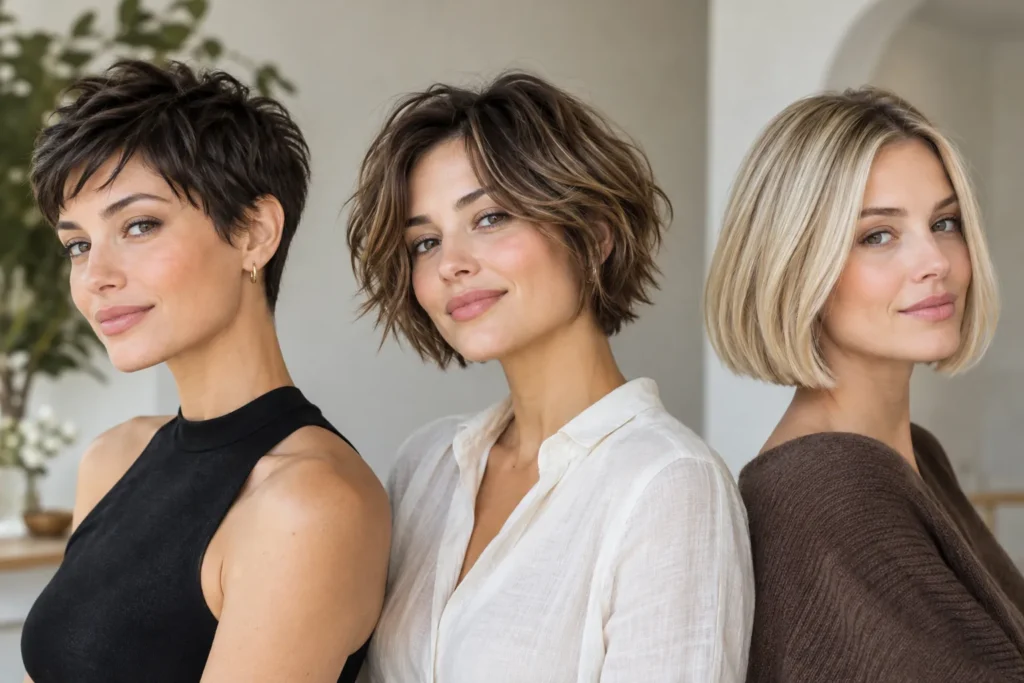
Bixie vs Pixie vs Bob at a Glance
| Feature | Pixie | Bixie | Bob |
|---|---|---|---|
| Typical length | Shortest of the three | Between a pixie and bob | Usually reaches the jaw or below |
| Overall shape | Closely cropped with length on top | Layered, soft and face-framing | Defined perimeter with more continuous length |
| Ear area | Often exposed | May be exposed or partly covered | Usually covered |
| Back and neckline | Short and closely shaped | Shorter than the front with a softer transition | Fuller and more clearly defined |
| Styling character | Cropped, textured or sleek | Tousled, feathered or softly polished | Smooth, curved, blunt or layered |
| Grow-out direction | Develops noticeable length around the sides and back | Can gradually move toward a short bob | Retains its bob outline as it grows |
Individual cuts vary, so length alone does not determine the category. The perimeter, crown layering, ear coverage and neckline also influence whether a haircut reads as a pixie, bixie or bob.
The Pixie
A pixie is generally the shortest option. The sides and back stay relatively close to the head, while the top may be left longer for texture, lift or a swept fringe. Some pixies are soft and feathered, while others use a more defined, closely cropped outline.
The exposed ear area and short neckline are often the easiest details to recognise. How frequently the shape needs refreshing depends on the cut, growth pattern and how precise you want the outline to remain.
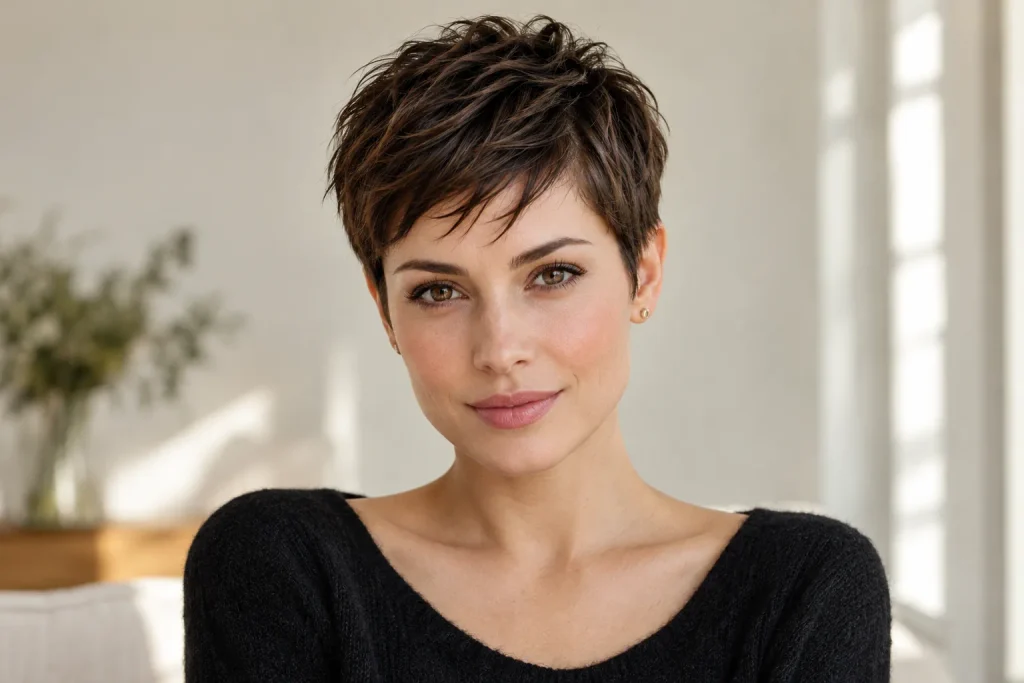
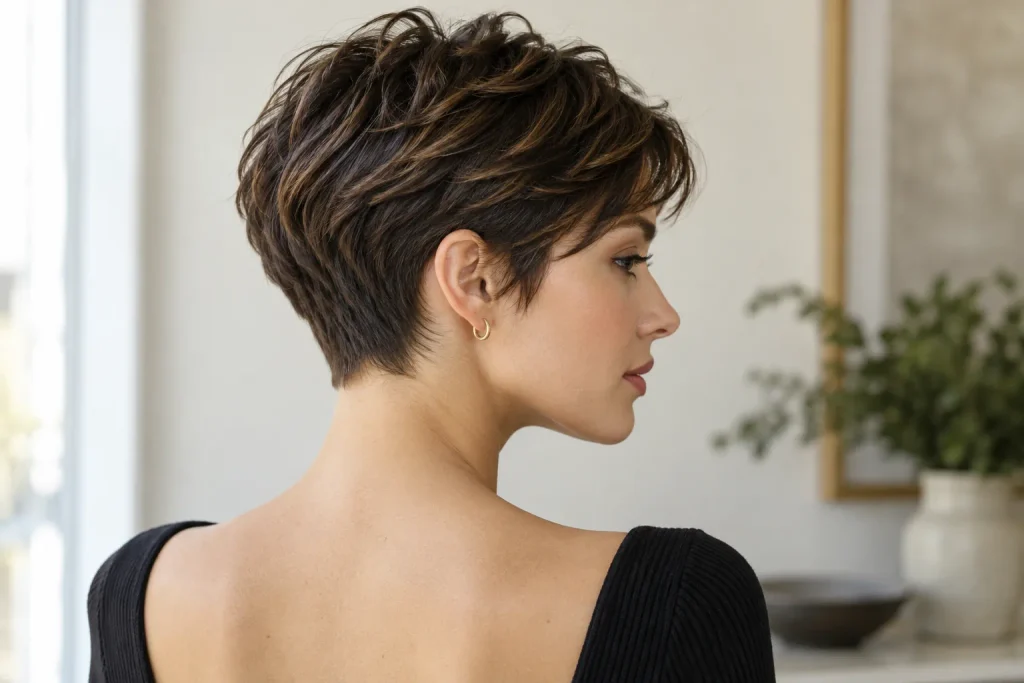
The front view shows the short fringe and textured top. The rear profile makes the closely shaped sides and tapered neckline easier to compare.
The Bob
A bob keeps more length through the sides and back. Its perimeter commonly sits around the jaw or slightly below it, although shorter and longer variations exist. The outline may be blunt, softly curved or layered according to the intended finish.
Compared with a pixie or bixie, a bob usually provides more continuous length around the ears and neckline. Internal layers can add movement while allowing the haircut to retain a recognisable bob shape.

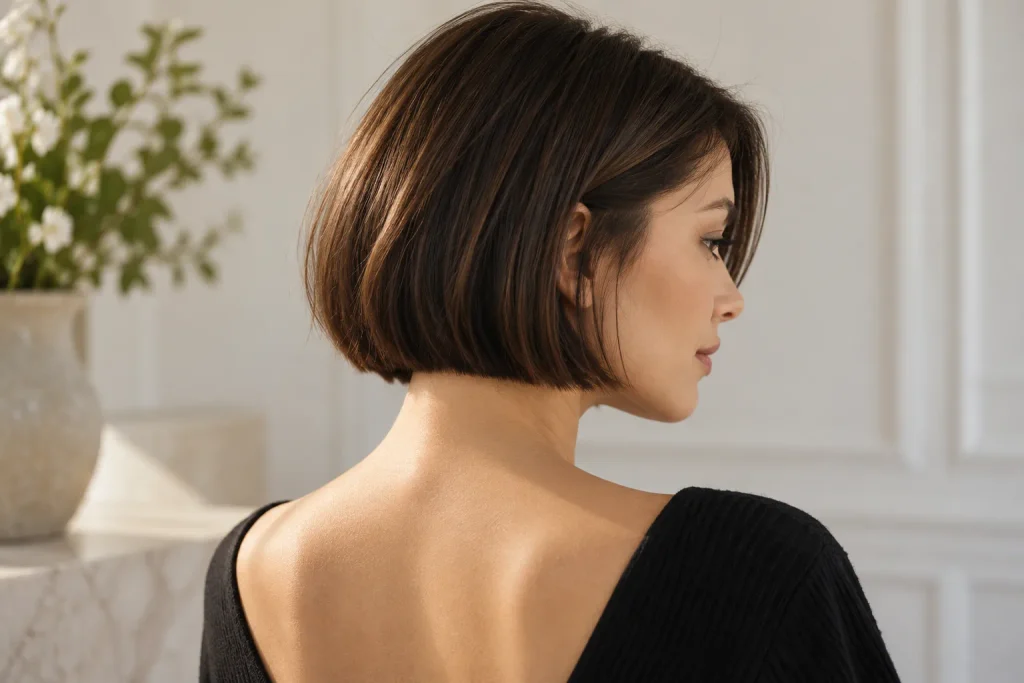
The front view shows the jaw-level perimeter and fuller sides. The rear profile highlights the continuous baseline and rounded shape.
The Bixie
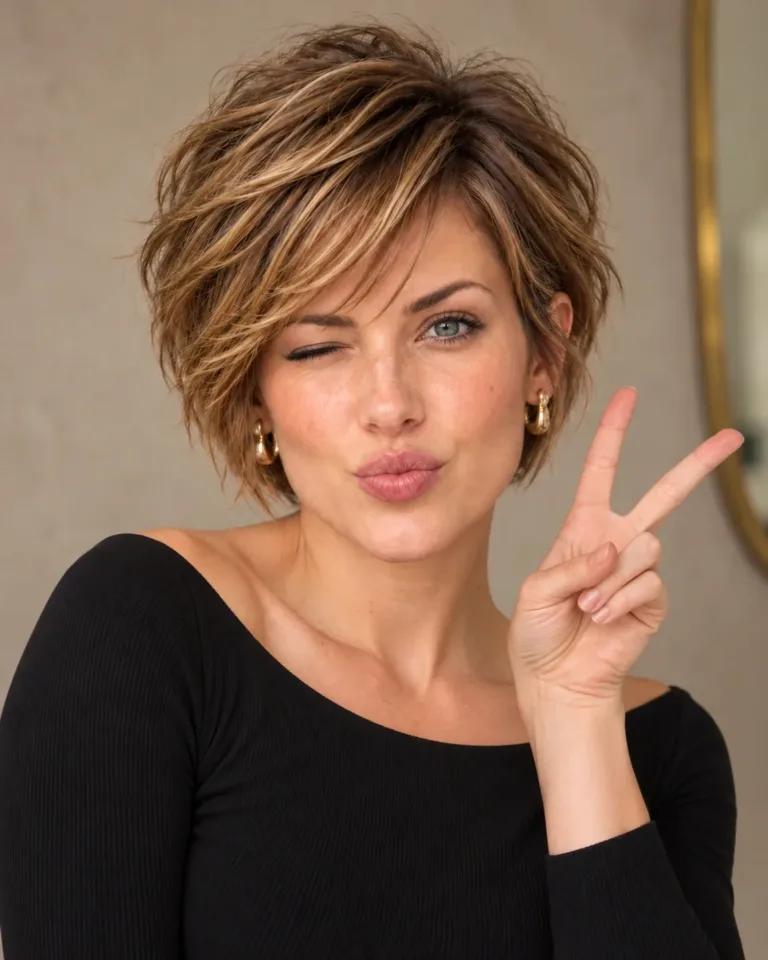
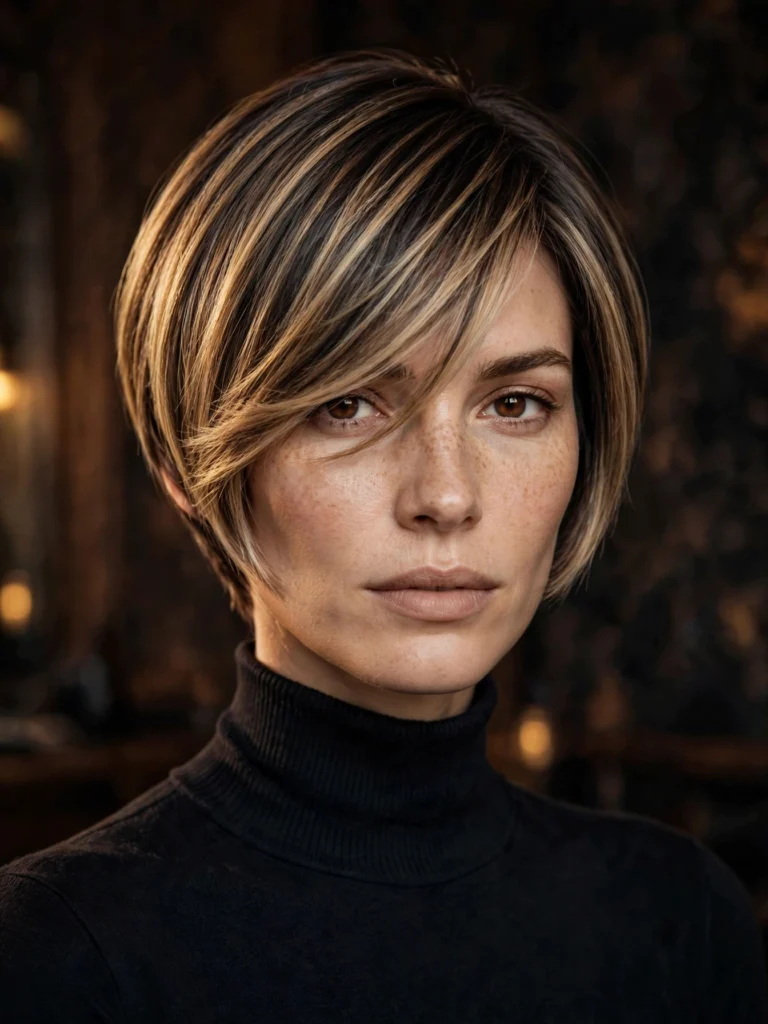
A bixie sits between the other two cuts. It combines the shorter back and layered crown often associated with a pixie with longer pieces around the fringe, temples or ears. The result can look soft, textured and less closely cropped than a traditional pixie.
There is no single required bixie length. The key distinction is the relationship between its sections: shorter shaping through the crown and back, with enough length through the front or sides to create movement and face framing.
For more examples, explore the site’s bixie photo collections.
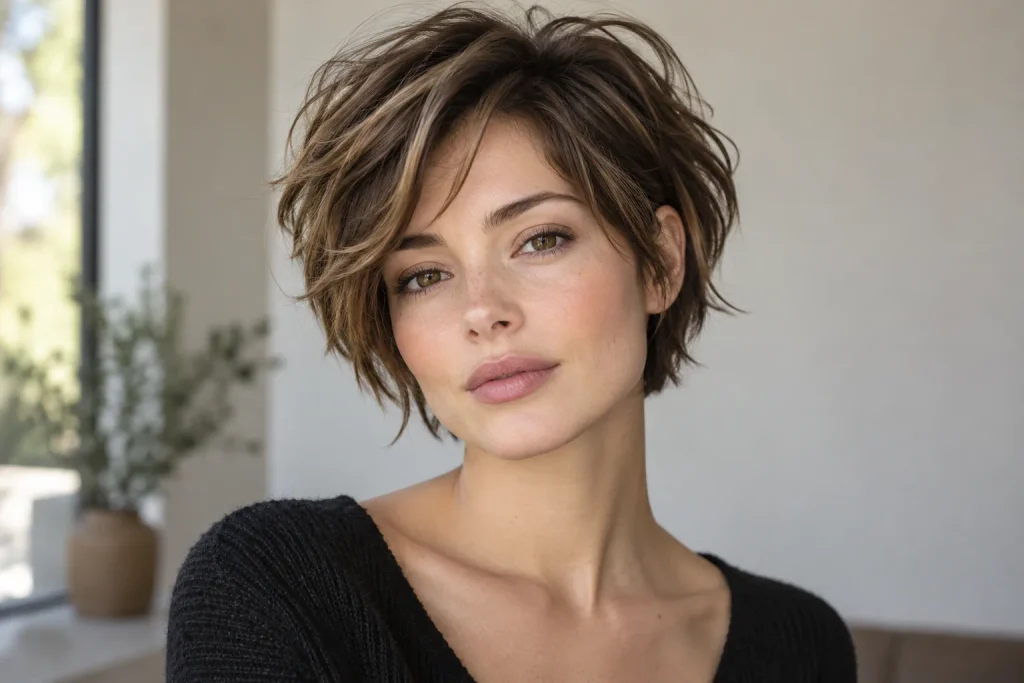
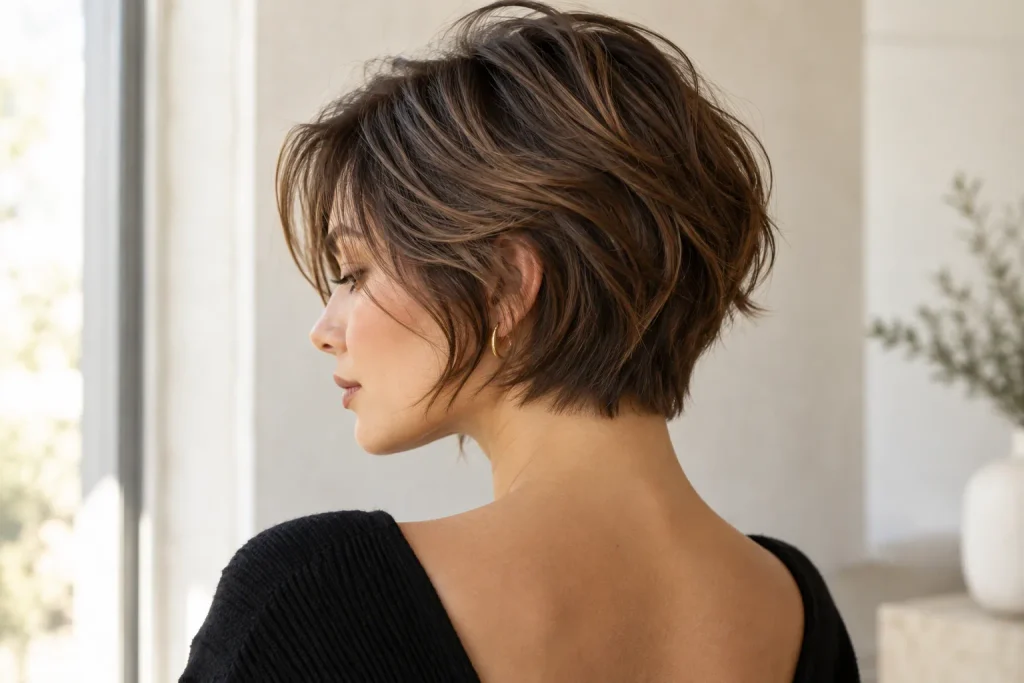
The front reference shows the longer sweep and layered face-framing pieces. The rear profile shows how the fuller crown transitions into a shorter neckline.
Which Haircut Should You Choose?
Consider a Pixie If You Prefer
- A distinctly short outline
- More visible ears and neckline
- Texture or height concentrated on top
- A cropped shape that feels clearly separate from a bob
Consider a Bob If You Prefer
- A more defined perimeter
- Greater length around the sides
- A smooth, curved or blunt outline
- Enough length for tucking and varied parting
Consider a Bixie If You Prefer
- Short layers with softer face framing
- More length than a pixie without a full bob perimeter
- Movement around the fringe, crown and ears
- A shape that can be styled tousled or polished
What to Discuss With Your Stylist
Bring front and rear-profile references rather than relying on one photograph. Point out how much length you want around the fringe, ears and neckline. It also helps to discuss your natural texture, density, usual parting and the amount of daily styling you are comfortable doing.
Treat each image as a shape reference. Your stylist can adjust the proportions to suit your hair and the way it naturally falls.
Frequently Asked Questions
Is a Bixie Longer Than a Pixie?
Usually, yes. A bixie commonly retains more length around the fringe, temples or ears, although individual pixie and bixie variations can overlap.
Is a Bixie the Same as a Short Bob?
They can look similar, but a bixie generally has more visible crown layering and a shorter, more pixie-like back. A short bob usually keeps a clearer perimeter.
Can a Pixie Grow Into a Bixie?
As a pixie gains length, it may begin to resemble a bixie. Strategic reshaping can help balance the crown, sides and neckline during the transition.