
The everyday routine

Start by choosing your finish: softly textured, naturally wavy or smooth. You do not need to straighten every layer or apply the same amount of product every day.
- Gently absorb excess water with a towel or T-shirt instead of rubbing the hair vigorously.
- Arrange your parting and fringe in the direction you want them to sit. Detangle gently using a method suited to your texture.
- Apply a small amount of a styling product suitable for your hair, following its directions. Spread it between your hands before distributing it so that one section does not receive a concentrated coating.
- Let your hair air-dry, or use a dryer on a low heat setting with a suitable heat-protection product. For a smoother finish, guide the fringe and sides into position; for natural waves or curls, preserve their existing grouping.
- Once the hair is dry, check the outline before adding more product. You may only need to define a few ends rather than coat the whole cut.
Gentle drying and limiting heat help reduce avoidable damage during styling.

Adjust the routine for your hair
Fine strands or hair that gets weighed down
Start with less product and check the result before adding another layer. A rich cream or generous coating of paste may give more weight than the finish needs. Try defining a few ends first instead of spreading finishing product throughout the crown.
Fine describes individual strand thickness; it is different from low hair density. The fine-hair bixie guide explains how to discuss both when choosing your shape.
Naturally wavy hair
Decide whether you want to keep the bends or create a smoother outline. To retain movement, arrange the waves while damp and gently scrunch the longer sections. When using a dryer, a diffuser is an option to discuss with your stylist.
Avoid judging the finished shape while the hair is still wet. Let the waves settle before deciding whether the crown or ends need more definition.
Curly or tightly textured hair
Detangle while the hair is wet and conditioned, using your fingers or a suitable wide-tooth comb. Work through manageable sections rather than pulling through knots.
Arrange the fringe with its curl grouping in mind. Brushing dry curls can disturb definition and contribute to frizz or breakage, so a straight-hair brushing routine may not suit this finish.
For extra texture
For a more separated finish, start with fully dry hair and a small amount of a finishing paste or wax intended for dry application. Spread it thinly across your fingertips, then lightly define selected ends around the fringe, crown or ears.
Choose the areas you want to emphasize rather than twisting every section. A few defined pieces can retain a soft outline, while stronger separation creates a more deliberately textured finish.
Add more only after checking the result. If the hair begins to feel coated or heavy, stop layering product. The amount needed depends on your strand thickness, density, product formula and preferred hold.
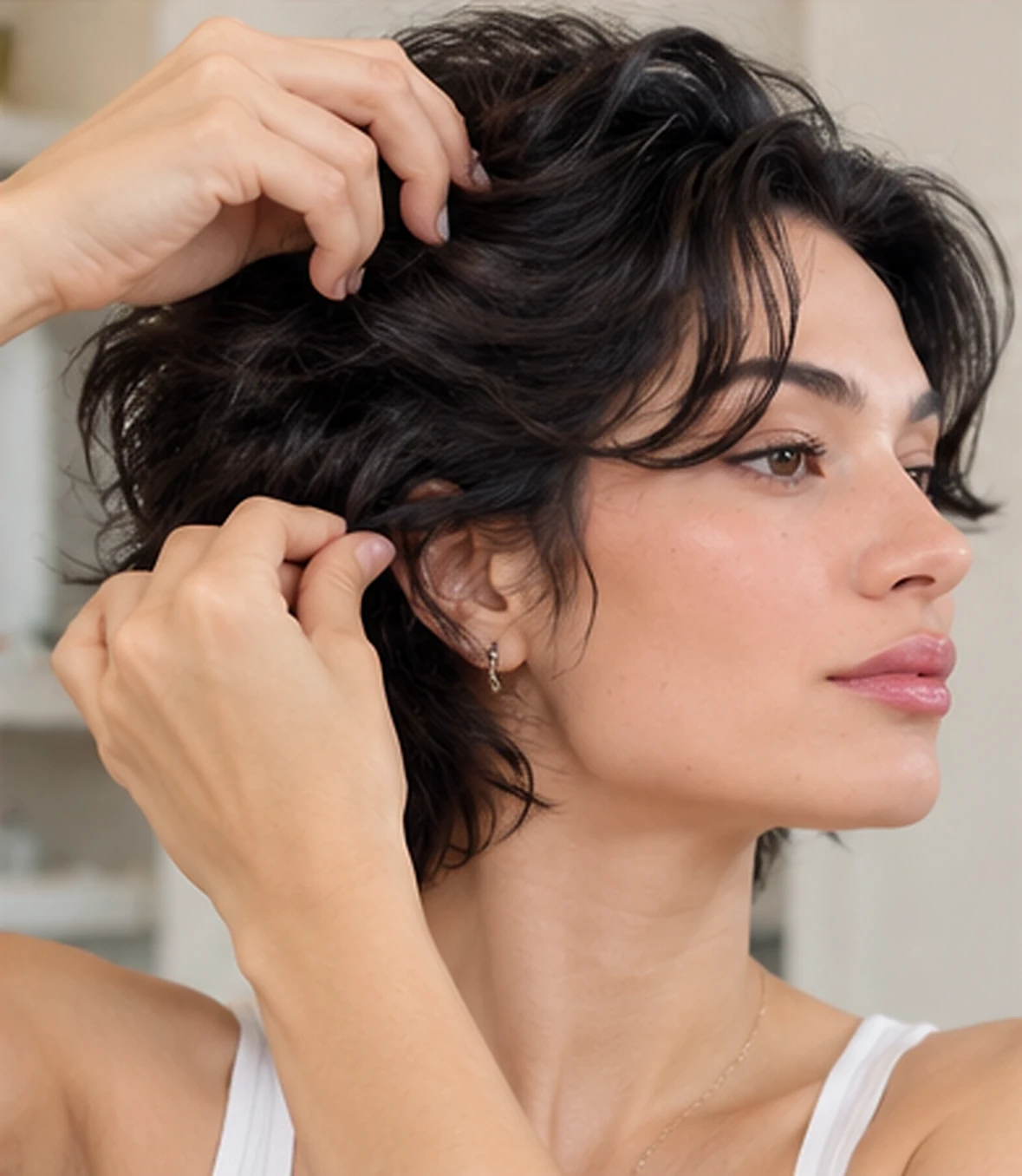
Sleek days
A sleek bixie emphasizes the direction of the fringe, the surface of the crown and the outline around the ears. Start by arranging the parting and guiding the hair toward the shape you want.
If you use a flat iron, work only on dry hair. Apply a suitable heat-protection product according to its instructions and use a low or medium heat setting. Limit unnecessary repeated passes; a smooth finish does not require flattening every section. Excessive heat can damage hair regardless of texture.
Tuck one side behind the ear if the length allows, or leave the side pieces forward for more coverage. Check the fringe from the front and side before adding finishing product. If achieving this finish requires more heat or effort than you want regularly, ask your stylist about a shape that works more closely with your natural texture.

Common styling problems
The crown looks flat: Before adding more paste, try guiding the roots upward while drying on a low heat setting. If the hair already feels coated, another layer of product may not give the lift you want.
The fringe separates or falls toward your eyes: Reset its direction while damp and check how it settles when dry. If the same problem returns, ask your stylist whether the fringe length or shape needs adjusting around your natural parting or growth pattern.
The sides look wider than you prefer: Compare the shape with the hair loose and tucked behind the ears. Tell your stylist which outline you want to retain so they can assess the side length and layering.
The finish feels stiff or heavy: At the next styling session, begin with less product and define fewer sections. Change one part of the routine at a time so you can identify what helps. Starting with a small amount and adding gradually is particularly useful when refreshing fine hair.
Growing it out

If you want to grow a bixie into a bob, agree to a reshaping plan with your stylist. Which sections need trimming, and when, depend on your current outline, growth pattern and target length.
Ask whether the neckline needs tidying while the front and sides gain length. Explain which areas you want to preserve rather than requesting the same trim at every appointment.
As the proportions change, you may prefer a different parting, an ear tuck or a softer finish. Save references showing the length you are working toward, and use the Find Your Look section to compare fringe direction, ear coverage and neckline shape.