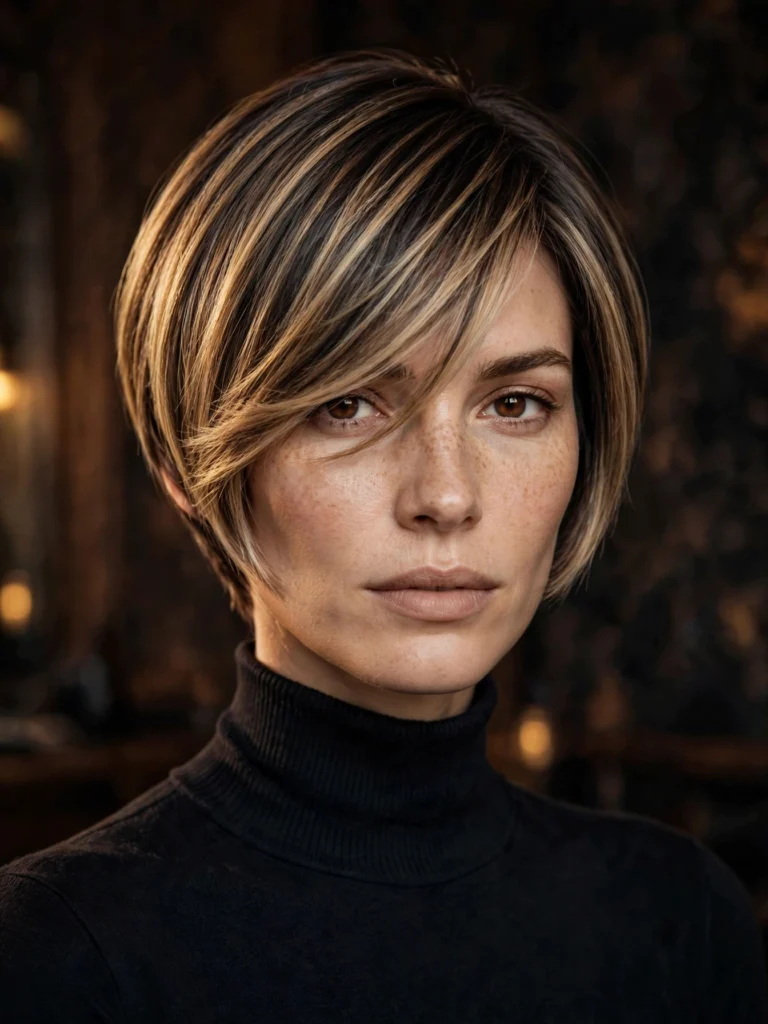
The main difference between a boy bob and a bixie cut is how the shape is built. A boy bob usually keeps a more continuous bob outline with minimal layering. A bixie combines bob-like length with shorter, pixie-inspired layers through the cut.
Their lengths can overlap, and either can be styled smooth or tousled. To tell them apart, look at the crown, the hair around the ears and the transition into the neckline.
What Is a Boy Bob?
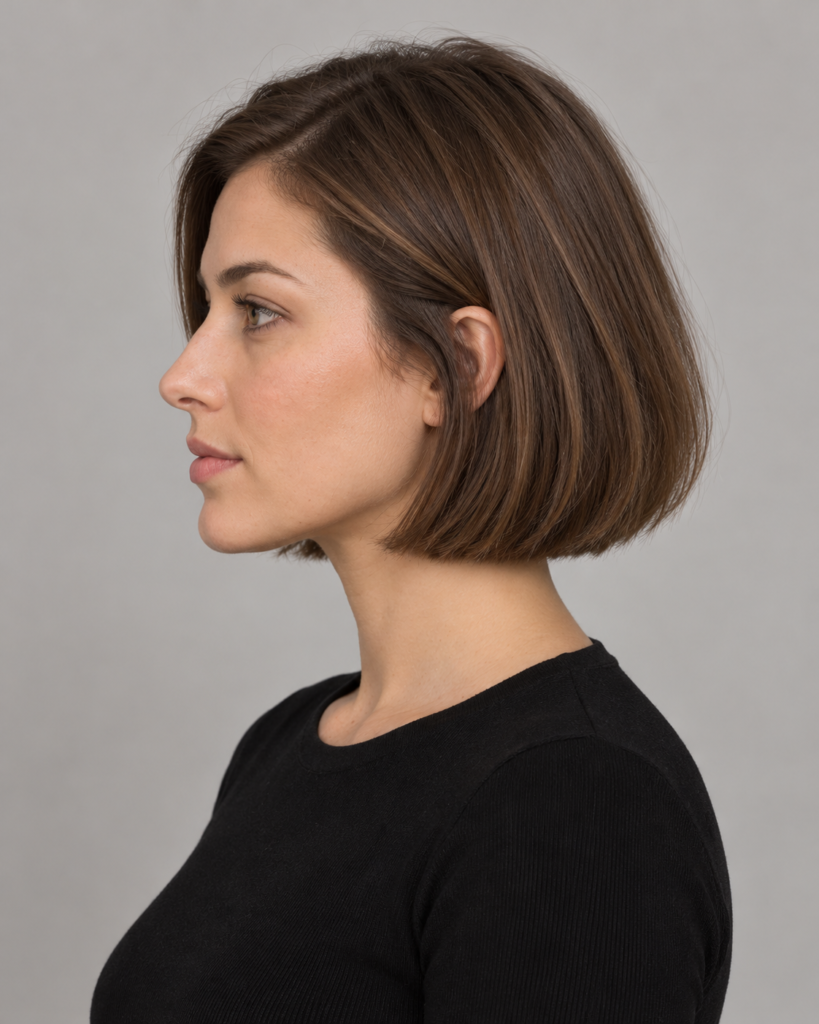
A boy bob is a short bob, often around the chin or jaw, with a relatively full outline and limited layering. The ends tend to form a more continuous edge rather than breaking into lots of shorter sections.
The finish does not have to be perfectly straight or sharp. A boy bob can have natural bends, a relaxed parting or hair tucked behind the ears while keeping its underlying bob shape.
When discussing this cut, describe where you want the ends to sit and how full you want the outline to look. A reference photo is more useful than relying on the name alone, as stylists may interpret “boy bob” differently.
What Is a Bixie Cut?
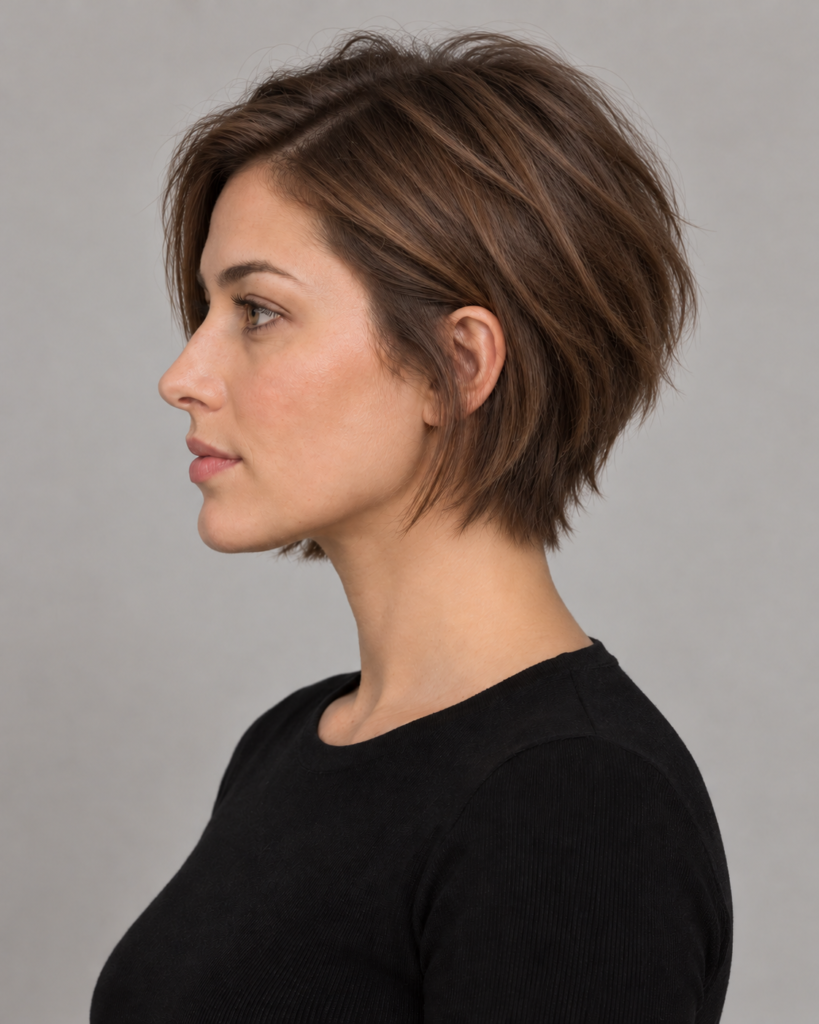
A bixie combines features of the bob and pixie. It generally has more layering than a boy bob, with shorter sections connecting to longer pieces around the face, ears or nape.
Those layers can create a more broken-up outline and make individual sections easier to define when styling. A bixie may have a wispy fringe, a longer sweep across the forehead or a more open front.
It does not have to look messy. A smooth bixie still has its layered structure, just as a tousled boy bob can retain a fuller bob outline.
Boy Bob vs Bixie: Side-by-Side Comparison
Compare the structure of the haircut rather than the colour, makeup or styling finish. These are useful starting points, rather than fixed rules for every version of either cut.
| Detail | Boy bob | Bixie cut |
|---|---|---|
| Overall outline | A fuller, more continuous bob shape | A more layered outline combining bob and pixie features |
| Layering | Usually minimal | Usually more noticeable throughout the cut |
| Around the ears | Longer sections may cover or tuck behind the ears | Shorter sections may expose more of the ear |
| Crown | Often retains more length and weight | May have shorter layers that change the crown shape |
| Neckline | Often follows the bob’s lower edge | May be more closely shaped or tapered |
| Styling finish | Can be smooth, bent or tousled | Can be smooth, separated or tousled |
Compare the Front
Look at the fringe, the parting and the length beside the cheeks. Notice whether the front pieces connect to a continuous bob edge or blend into shorter sections around the ears.


Compare the Side
The side view helps you see ear coverage and the relationship between the crown and the lower edge. Compare where the longest pieces sit and how gradually the length changes toward the back.
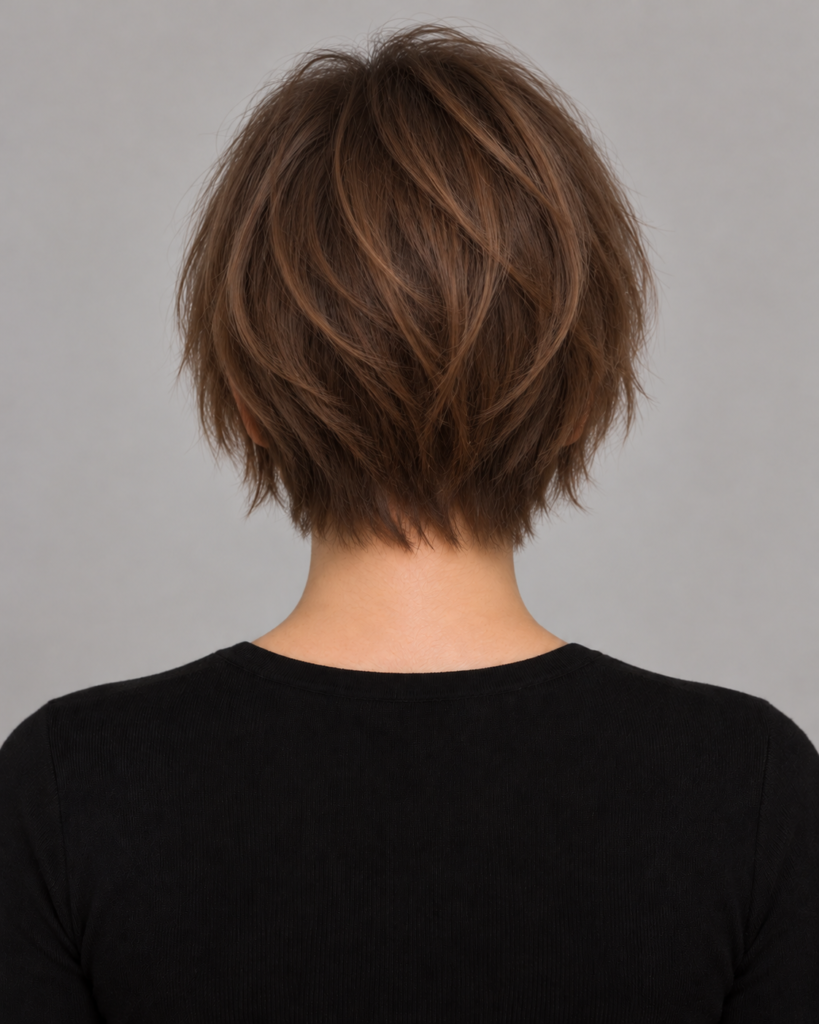
Compare the Back
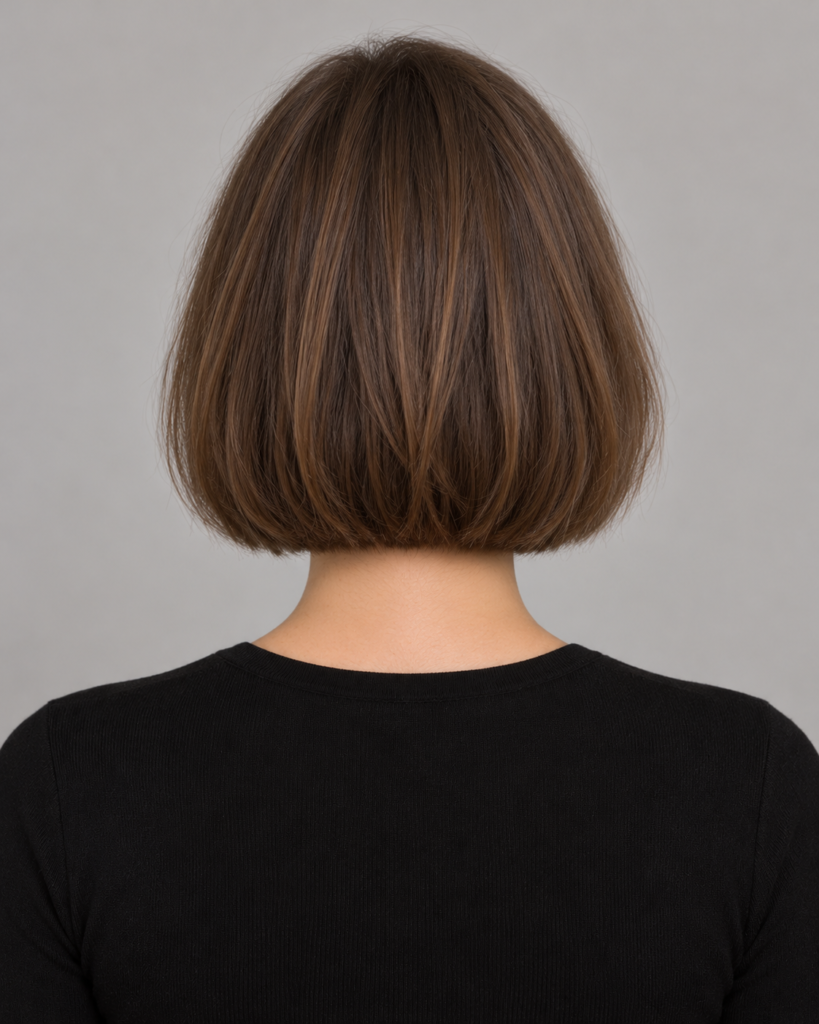
Look at the lower outline and the amount of hair left at the nape. A fuller bob edge and a more closely shaped bixie neckline can look quite different, even when the front lengths appear similar.
Which Cut Should You Choose?
Start with the details you want to keep.
A boy bob may be a useful reference if you prefer a fuller lower edge, fewer short layers and enough length around the ears to tuck back, depending on the finished length.
A bixie may be a useful reference if you prefer shorter layered sections, a more defined crown shape or a closer neckline while keeping some longer pieces near the face.
Your hair’s texture, density, growth patterns and styling routine also matter. Ask your stylist how each outline could behave on your hair, including areas that tend to lift, separate or fall flat. Neither haircut name guarantees an easy routine or a particular result.
What to Ask Your Stylist
Bring your preferred references and explain:
- Where you want the longest pieces to sit.
- How much of your ears you want covered.
- Whether you prefer a fuller lower edge or a closer neckline.
- How short you are comfortable going through the crown.
- Whether you usually air-dry, blow-dry or use styling tools.
You can like the fringe from one reference and the neckline from another. Ask whether those details can connect into a workable shape for your hair.
Browse the bixie collections to shortlist layered shapes and identify the details you want to discuss.